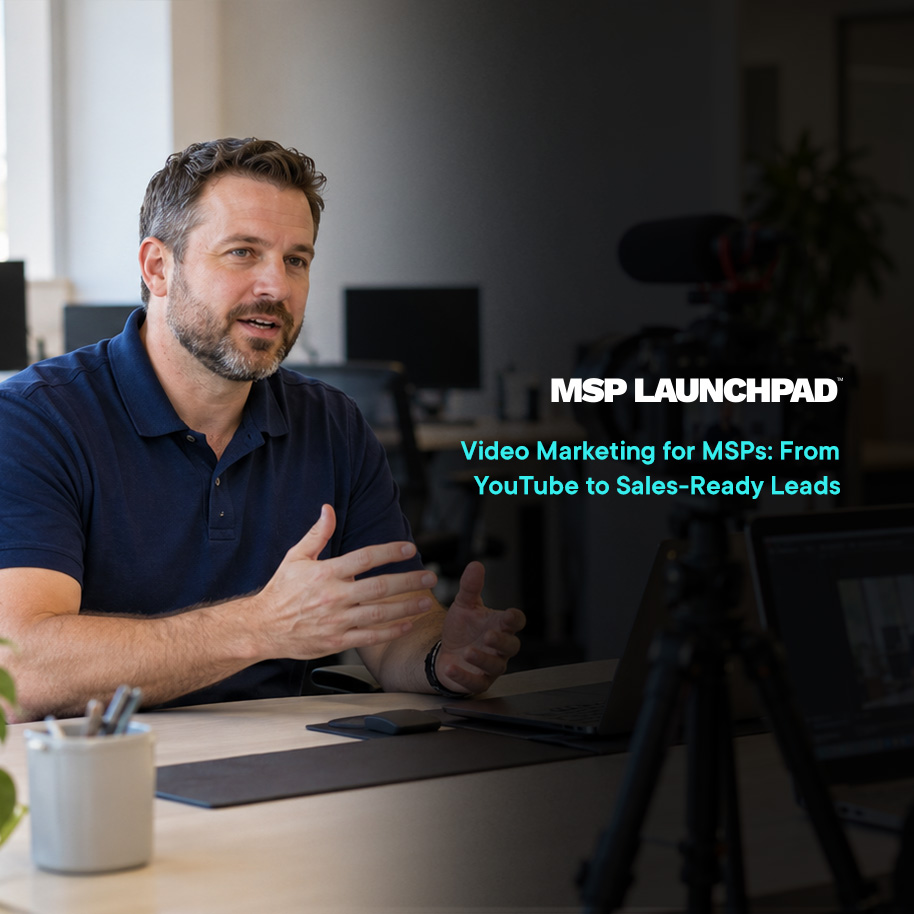


A business owner may research IT providers for several weeks before contacting one. They search locally and compare websites, trying to work out who understands their problems. Useful videos let prospects get to know your MSP before the first meeting.
That is the opportunity in video marketing. A strong YouTube channel answers prospective clients' questions and gives them a reason to continue the conversation.
Connecting that attention to sales takes more than regular uploads.
Video marketing gives buyers something they can evaluate
Managed IT services are hard to judge from a feature list. Nearly every provider promises responsive support, but prospects want to know what working with your team actually looks like.
A technician explaining what happens after an urgent support request offers more context than a claim about fast response. An owner discussing an unreliable IT setup can demonstrate experience without a sales pitch.
Let viewers hear from your team, using language business owners can understand.
YouTube for business starts with the right audience
Using YouTube for business is not about maximizing subscribers. A locally focused MSP needs viewers who can actually become clients.
Start with questions prospects bring to sales calls. They might wonder whether they have outgrown break-fix support or what managed IT should include.
Answering one specific question also creates a clear title and a video you can share during sales conversations.
Build a channel around buyer questions
Organize videos around client concerns, such as cybersecurity or changing IT providers. Avoid unrelated tech news simply because it is popular.
Use descriptive titles. In each description, tell viewers who you help and where you operate.

B2B video marketing reflects a longer buying decision
B2B video marketing must account for slow buying decisions. A company changing IT providers might compare proposals or wait for an existing agreement to end.
Videos can support different stages.
Early on, a short discussion about recurring network problems may help a viewer recognize the need for support. Later, a video about what happens during an MSP transition can address concerns that arise before signing.
Keep each video focused on the question behind it. A prospect researching cybersecurity may not be ready for a consultation, but they may remember the provider that explained the issue clearly.
The aim is to become a credible option before the buyer creates a shortlist.
An explainer video can remove the friction before a meeting
An explainer video is particularly useful when a service sounds complicated or when prospects have the same hesitation again and again.
Imagine a company interested in managed IT but worried about the disruption of switching providers. A two-minute video could walk through your onboarding process, showing what information you collect, when communication happens, and what staff can expect.
The best version does not need flashy animation. A knowledgeable person speaking clearly, supported by a few relevant visuals, can be enough.
Use the words prospects use themselves. Explain the business implications of an outage before discussing technical systems. If a term needs another technical definition to make sense, simplify it.

Short videos open doors without doing all the selling
YouTube Shorts can reach viewers who would skip a longer technical presentation. A quick, useful insight can spark interest.
Explain a common mistake companies make when comparing IT support quotes. Give viewers something specific to consider without a full service presentation.
Longer videos can then explore the questions that deserve more detail. A short clip about poor response times could lead to a fuller discussion of service expectations and how to evaluate providers.
Both formats should complement each other. Do not expect a 40-second video to explain your entire offering or close a managed services agreement.
Give interested viewers a next step that fits
A video becomes more valuable commercially when viewers know what to do afterward. But pushing everyone directly toward a sales call can be premature.
Match the next step to the subject. Someone watching a general security video may appreciate a related guide or a deeper explanation. Someone watching a comparison of managed IT proposals may be ready to book a consultation.
Include the relevant link in the video description and make the destination easy to understand. The landing page should continue the same conversation, not send visitors to a generic homepage with no clear connection to what they watched.
It also helps to state the geographic area and business types your MSP serves. That reduces inquiries from people who were never a suitable match.

Measure the journey from views to qualified leads
View counts show reach, not revenue. A video with modest traffic from local business owners can be more valuable than a popular clip viewed mostly by people outside your market.
Watch whether people stay long enough to hear the key point. Review which topics bring visitors to your site and which videos generate relevant inquiries. When someone books a call, ask whether your videos influenced their decision.
Track these details in your CRM alongside opportunity stage and deal outcomes. Tagged links can help connect some visits to particular videos, but they will not capture every person who watches and returns later through search.
Look for patterns over several months. You want to know whether video marketing is contributing to more sales-ready conversations, not simply whether this week's upload performed better than the previous one.
A sustainable publishing rhythm beats a rushed launch
You do not need a complicated studio or daily uploads to begin. Start with a small set of questions your sales and support teams hear repeatedly. Record clear answers, then edit them into videos that respect the viewer's time.
A longer recording can sometimes produce a focused Short, giving you more than one useful format without starting from scratch. Still, each cut should make sense on its own.
Set a manageable schedule and review results. If viewers consistently respond to pricing questions but ignore general technology updates, let that inform the next recording session.
Consistency helps, but relevance matters more than filling a calendar.
Turn attention into the right conversations
A successful MSP video strategy does not end when somebody subscribes. It ends with more of the right businesses understanding your services well enough to consider working with you.
Useful videos establish familiarity before the first call. Clear next steps make it easier for interested viewers to act, and disciplined tracking shows whether those conversations become clients.
MSP Launchpad helps MSPs connect content with the larger goal of attracting qualified opportunities. The focus should remain on videos that make your expertise useful to the people you want to serve.
FAQs
Is YouTube for business worth the effort for a small MSP?
Yes, if the topics match the clients you want to reach and you can maintain a realistic schedule. A small local audience of decision-makers may be more useful than broad exposure. Start with common buyer questions and judge the results by lead quality.
What belongs in an explainer video for managed IT services?
Choose one topic that creates uncertainty, such as onboarding, support coverage, or pricing structure. Explain what the client should expect in straightforward language. Keep the video focused enough that someone can finish it with a clearer understanding of the service.
Does B2B video marketing require expensive equipment?
No. Clear sound, adequate lighting, and a speaker who understands the subject are a good foundation. Invest first in useful topics and direct explanations. Improve production quality as your process develops, and you learn what your audience values.
Which results matter most in video marketing?
Track relevant website visits, qualified inquiries, booked meetings, and deals influenced by video. Views and watch time can help improve the content, but closed business provides a stronger measure of commercial value. Review results over a period that reflects your typical sales cycle.