.png)





Google reviews often shape a prospect’s first impression of a managed service provider. Before a business owner schedules a call, they may compare ratings, read recent comments, and look for signs that an MSP is responsive, knowledgeable, and easy to work with. A profile with only a few old reviews can make an experienced provider look less established than nearby competitors.
Learning how to get Google reviews is not about sending occasional requests when someone remembers. It requires a repeatable process that identifies the right moments, makes participation easy, and keeps the experience professional. A strong review engine can improve local visibility, support sales conversations, and give prospects more confidence before they contact your team.

A repeatable system makes reviews more consistent
Many MSPs rely on informal review requests. A technician solves a difficult issue, a client expresses appreciation, and someone plans to ask for feedback later. The request is often forgotten once the next ticket, meeting, or project takes priority.
A repeatable system defines who should receive a request, when it should be sent, who owns the process, and how responses will be tracked. This makes review generation part of the client experience instead of a separate marketing task.
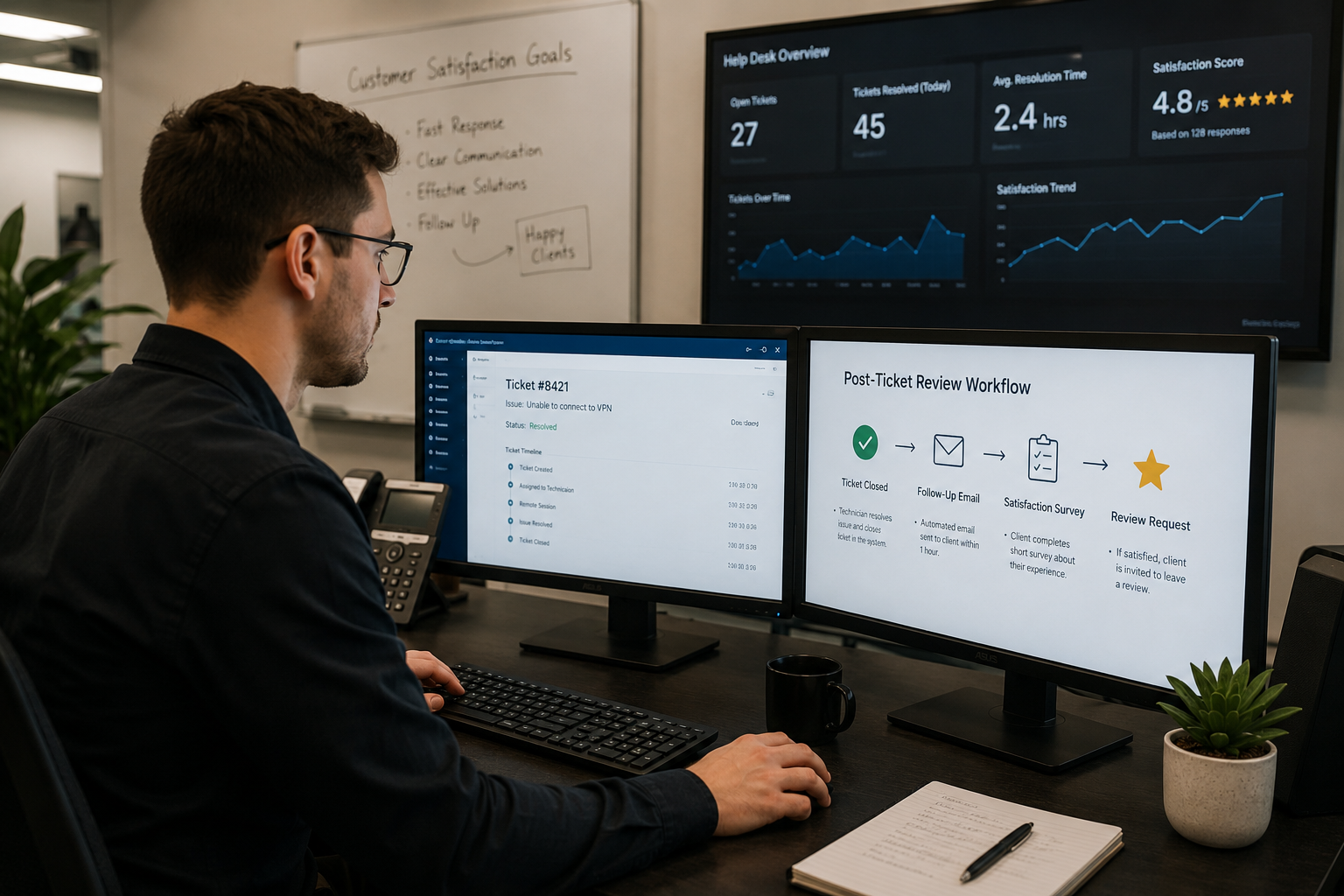
Start by identifying moments when clients are likely to feel positive about the relationship. These may include completed onboarding, a successful migration, the resolution of a major problem, a quarterly business review, or a compliment sent to a team member. The best timing usually follows a clear success that the client can easily remember.
Assign responsibility to one person or role. Account managers can identify strong client relationships, while marketing can prepare messages and monitor results. Service teams can flag positive interactions without managing every follow-up.
Consistency matters more than volume. Genuine reviews earned steadily over several months usually appear more credible than a sudden burst followed by silence.
Review management software can simplify the process
Review management software can help an MSP send requests, monitor responses, and keep the process organized. It is especially useful for providers with many clients, multiple locations, or several account managers involved in communication.
Useful features may include email or text templates, automated reminders, direct review links, reporting, and notifications when new feedback appears. Google should usually remain a priority because of its role in local visibility.
Automation still needs limits. A client should not receive repeated requests after ignoring the first message, and the system should avoid contacting people during an unresolved support problem. Review requests should feel connected to the relationship, not triggered without context.
Before choosing software, consider how it fits with the MSP’s CRM, ticketing system, or communication tools. Smaller MSPs may not need a dedicated platform immediately. A spreadsheet, a direct Google review link, and a monthly review of opportunities can provide enough structure to begin.

Online reputation management extends beyond ratings
Online reputation management covers how a company appears across search engines, review platforms, directories, and social channels. Google reviews are important, but they are only one part of the public picture.
Prospects may also notice whether business information is consistent, whether reviews receive responses, and whether recent feedback reflects the services promoted on the website. A strong reputation is built through alignment between the MSP’s claims and the experiences clients describe.
Responding to reviews shows that the company pays attention. Positive comments deserve a genuine thank-you, but replies should not reveal private details about the client’s systems or support needs.
Negative feedback requires a calm approach. Acknowledge the concern, avoid arguing publicly, and invite the reviewer to continue the conversation privately. A professional response can reassure future prospects even when the complaint seems unfair.
Recurring themes also provide useful marketing insight. Reviews may repeatedly praise communication, fast resolution, strategic guidance, or friendly support. These patterns reveal what clients value and can strengthen website copy and sales messaging.
The right moments to ask for reviews
Knowing when to ask for reviews can affect response rates. A general request sent without context is easy to ignore. A request connected to a positive experience feels more natural and gives the client something specific to discuss.
A strong opportunity often appears when a client compliments the team. The account manager can acknowledge the feedback and ask whether the client would be willing to share it on Google. The request should be respectful and easy to decline.
Project completion is another useful moment, especially when the work produced a clear result. A cloud migration, security improvement, office move, or onboarding process can give the client a meaningful experience to describe. Quarterly reviews can also work well when the conversation confirms that the partnership is delivering value.
Avoid asking during unresolved tickets, billing disputes, or periods of client frustration. Timing should reflect the client’s experience, not an internal schedule alone. The goal is authentic feedback, not a perfect profile created through pressure.
A simple request improves participation
The easiest review request is clear, personal, and brief. Clients should understand why their feedback matters and be able to reach the review page without searching for it.
A message can thank the client for their partnership, mention the recent positive outcome, and include a direct link to the Google review form. Avoid giving them a script or telling them what to say. Authentic wording is more credible.
A message from an account manager who knows the client will usually feel more natural than a generic email from an unfamiliar marketing address. Templates can save time, but the sender should adjust the wording to fit the relationship.
One polite reminder may be reasonable if the client does not respond. More than that can become intrusive. Mobile usability should also be checked because many recipients will open the request on a phone.

Reviewing data can strengthen MSP marketing
Reviews provide language directly from clients, making them valuable for broader marketing. The phrases clients use can reveal which outcomes matter most and which parts of the service experience stand out.
A prospect may care less about the technical details of a resolved issue and more about employees returning to work quickly. A review praising clear communication may show that clients value updates as much as technical skill.
These insights can shape service pages, case studies, social posts, sales presentations, and local campaigns. Testimonials can also support conversion when used with permission and presented accurately.
Track whether review growth affects profile views, calls, website visits, and lead quality. More reviews do not guarantee more sales, but recent and detailed feedback can reduce uncertainty during the buying process.
Learning how to get Google reviews should connect with the MSP’s wider marketing strategy. The goal is not simply to improve a rating. It is to build visible proof that supports trust and growth.
Moving forward
A steady flow of genuine reviews comes from a process that respects clients and fits naturally into the service experience. Review management software, thoughtful timing, and clear ownership can make the system easier to maintain. Strong online reputation management also requires professional responses and regular monitoring. MSP Launchpad helps MSPs turn client trust into stronger visibility and qualified opportunities.
FAQs
What is the best way to ask for reviews from MSP clients?
Ask soon after a positive experience, use a personal message, and provide a direct link to the Google review page. Keep the request brief and avoid telling the client what rating or wording to use.
Can review management software help an MSP earn more reviews?
Review management software can improve consistency by automating requests, tracking responses, and alerting the team to new feedback. The system still needs thoughtful timing and human oversight to keep communication relevant.
What does online reputation management include for an MSP?
Online reputation management includes monitoring reviews, responding professionally, correcting inconsistent business information, tracking feedback themes, and improving the company’s public presence across search and directory platforms.
What is a realistic timeline for building a strong review profile?
The timeline depends on the size of the client base and the consistency of the process. Most MSPs benefit from earning reviews gradually over time instead of trying to collect a large number at once.

%20(1).avif)
.svg)