.png)




Most MSPs invest time and money into driving traffic through ads, LinkedIn, email campaigns, or SEO. Yet many overlook the most critical part of the funnel: what happens after a prospect clicks. If your landing pages are not converting, more traffic simply means more wasted budget.
This is where conversion rate optimization becomes one of the highest-leverage growth strategies for MSPs. Instead of chasing more visitors, you focus on turning a higher percentage of existing visitors into qualified leads. Even small improvements to a lead generation landing page can dramatically increase results.
In this guide, we break down how MSPs can use proven landing page optimization techniques to double lead conversion rates without increasing ad spend.
Why conversion rate optimization matters for MSPs
Conversion rate optimization is the process of improving how effectively a page turns visitors into leads. For MSPs, this usually means getting prospects to book a call, request an assessment, or download a resource.
Most MSP websites were built to look professional, not to convert. They often include too many services, too much technical language, and too many distractions. A strong conversion rate optimization strategy shifts the focus from information to action.
For MSP owners, the benefit is simple. Higher conversion rates mean lower cost per lead, better ROI from marketing campaigns, and more predictable pipeline growth.
Understanding how prospects use a lead generation landing page
A lead generation landing page is different from a homepage. Visitors arrive with a specific intent, usually driven by an ad, email, or LinkedIn post. They want clarity, relevance, and reassurance.
Most prospects scan rather than read. They look for confirmation that they are in the right place and that the offer solves a problem they care about. If that does not happen quickly, they leave.
Effective conversion rate optimization starts by designing pages around user behaviour rather than internal MSP messaging.
Landing page optimization starts with a single goal
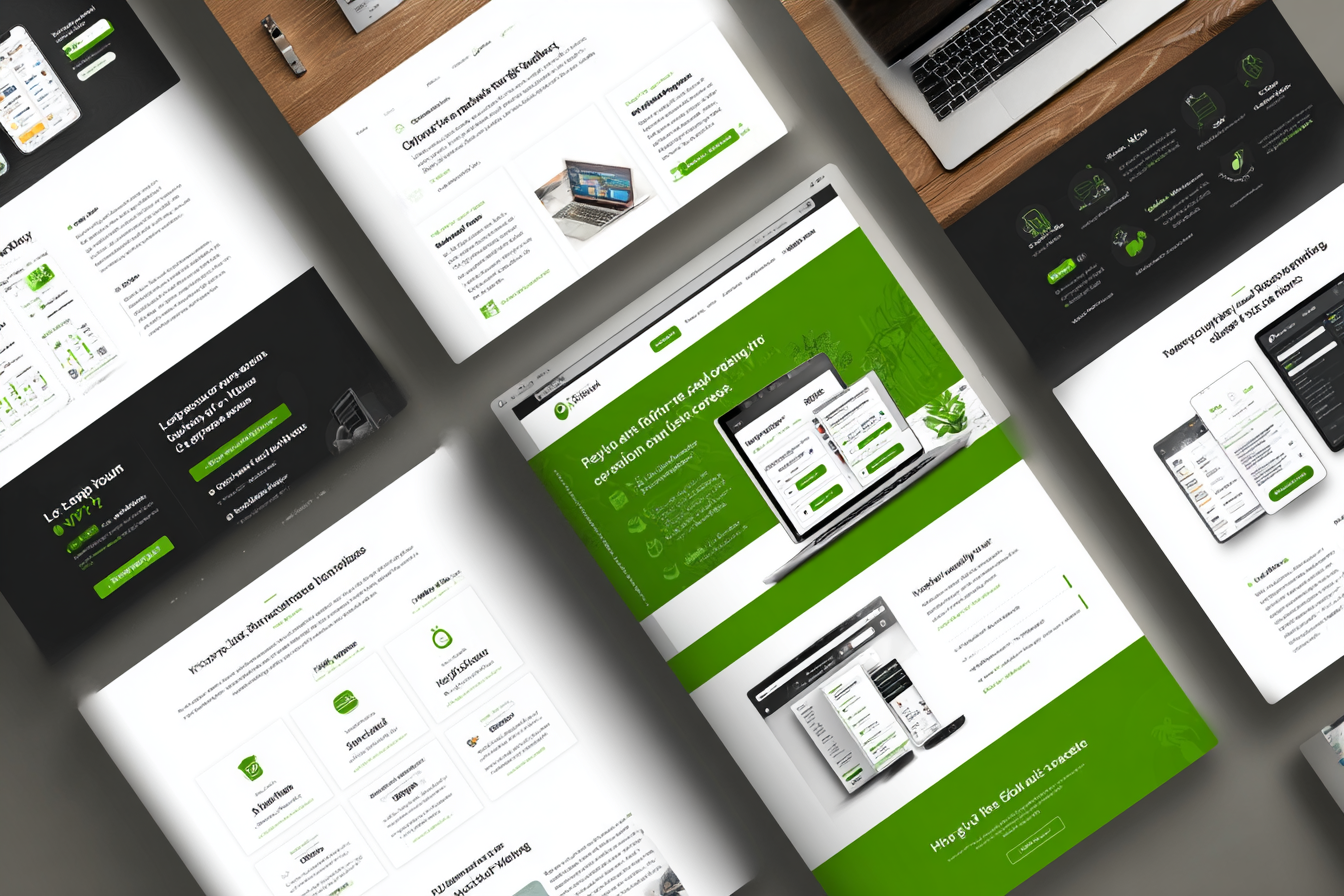
One of the most common mistakes MSPs make is asking visitors to do too many things. A lead generation landing page should have one clear objective. This could be booking a discovery call, downloading a guide, or requesting a security assessment. Everything on the page should support that one action. Landing page optimization improves conversion rates by removing unnecessary navigation, links, and secondary offers that distract visitors from converting.
Crafting headlines that drive conversion rate optimization
Your headline is the most important element on the page. It determines whether visitors keep reading or leave.
Strong headlines focus on outcomes, not services. Instead of listing technologies, they address business pain points such as downtime, security risk, or compliance pressure.
For MSPs, conversion rate optimization improves significantly when headlines speak directly to the prospect’s problem and desired result rather than generic IT benefits.
Writing copy that supports landing page optimization
Landing page copy should be clear, concise, and benefit-driven. Long paragraphs and technical jargon reduce conversions.
Use short sections that explain the problem, the impact, and how the offer helps. Social proof, such as client outcomes or testimonials, reinforces trust without overwhelming the page.
Effective landing page optimization ensures copy answers one key question: why should this visitor take action right now?
Designing forms that increase conversions
Forms are where conversions happen or fail. Many MSPs sabotage conversion rate optimization by asking for too much information upfront.
A lead generation landing page should only ask for what is necessary. Name, email, and company are often enough for initial contact.
Reducing form fields is one of the fastest ways to improve conversion rate optimization, especially for top-of-funnel offers.
Using trust signals to support conversion rate optimization
Trust is a major factor in MSP buying decisions. Prospects are cautious and risk-averse, especially when it comes to IT and security.
Trust signals such as certifications, client logos, testimonials, and guarantees help reduce hesitation. These elements should be placed near the call to action where decisions are made.
Landing page optimization is not about adding more content, but about placing the right reassurance in the right location.
Optimising calls to action for lead generation landing pages
Calls to action should be specific and action-oriented. Generic buttons like submit or contact us underperform.
Instead, use language that reflects value, such as book your free assessment or get the security checklist. This reinforces the benefit of converting.
Conversion rate optimization improves when calls to action align with visitor intent and feel low-risk rather than sales-driven.
Mobile optimisation and conversion rate optimization
A significant portion of MSP traffic comes from mobile devices, especially LinkedIn and email campaigns. If your landing pages are not mobile-friendly, conversions suffer.
Buttons should be easy to tap, forms should be simple, and text should be readable without zooming. Mobile performance is now a core part of landing page optimization.
Testing pages on multiple devices is essential to maintaining a strong conversion rate optimization across all traffic sources.
Page speed and its impact on conversion rate optimization
Slow-loading pages kill conversions. Even a one-second delay can significantly reduce form submissions.
Images should be compressed, scripts minimised, and hosting optimised. Speed improvements often deliver immediate gains in conversion rate optimization.
For MSPs running paid campaigns, page speed directly affects cost per lead and overall campaign performance.
Testing and improving landing page optimization
Conversion rate optimization is not a one-time task. It requires ongoing testing and refinement.
A/B testing allows MSPs to compare different headlines, layouts, forms, or calls to action. Small changes can lead to meaningful improvements over time.
The most successful MSPs treat landing page optimization as a continuous process rather than a project they complete once.
Aligning landing pages with traffic sources
Every lead generation landing page should match the message that drove the click. Misalignment reduces trust and increases bounce rates.
If an ad promotes a cybersecurity assessment, the landing page should focus entirely on that offer. Consistency improves conversion rate optimization by meeting visitor expectations.
Customising landing pages for different campaigns is one of the most effective ways MSPs increase conversions without increasing spend.
Measuring success beyond form fills
While form submissions matter, conversion rate optimization should also consider lead quality. Not all conversions are equal.
Tracking which landing pages generate booked calls, qualified opportunities, and closed deals provides deeper insight into performance.
Landing page optimization is most effective when measured against revenue outcomes, not just raw conversion percentages.
Common mistakes MSPs make with conversion rate optimization
One common mistake is copying competitors instead of testing based on audience behaviour. What works for one MSP may not work for another.
Another issue is focusing on design trends rather than clarity. Clean, simple pages often outperform visually complex designs.
MSPs also sometimes stop optimising once pages perform reasonably well. Continuous conversion rate optimization is what separates good results from great ones.
Scaling MSP growth with conversion rate optimization
As MSPs grow, conversion rate optimization becomes even more valuable. Higher conversion rates mean more leads without increasing traffic or ad budgets.
Landing page optimization also improves the efficiency of sales teams by delivering more qualified leads into the funnel.
For MSPs focused on sustainable growth, conversion rate optimization is one of the highest ROI marketing activities available.

How MSP Launchpad supports landing page optimization
MSP Launchpad helps MSP owners design and optimise lead generation landing pages that convert. By combining strategy, copy, and data-driven testing, MSP Launchpad supports predictable pipeline growth.
Rather than generic templates, the focus is on conversion rate optimization tailored to MSP buyer behaviour. This ensures landing pages support real sales outcomes, not just clicks.
Final thoughts
Conversion rate optimization allows MSPs to grow smarter, not harder. By improving how landing pages perform, MSP owners can double lead volume without doubling marketing costs.
Landing page optimization is about clarity, relevance, and trust. When done correctly, it transforms marketing from an expense into a scalable growth engine.
For MSPs serious about lead generation, conversion rate optimization is not optional. It is essential.
FAQs
What is conversion rate optimization, and why does it matter for MSPs?
Conversion rate optimization improves the percentage of visitors who become leads. For MSPs, it lowers cost per lead and increases marketing ROI.
What makes a high-performing lead generation landing page?
A high-performing lead generation landing page has one clear goal, strong messaging, minimal distractions, and clear calls to action.
How does landing page optimization improve MSP lead quality?
Landing page optimization aligns messaging with ideal client pain points, attracting more qualified prospects rather than general enquiries.
How often should MSPs update landing pages?
MSPs should review landing pages regularly and test improvements quarterly to maintain a strong conversion rate optimization.
Can small MSPs benefit from conversion rate optimization?
Yes, conversion rate optimization is especially valuable for small MSPs because it maximizes results from limited marketing budgets.

%20(1).avif)
.svg)