.png)


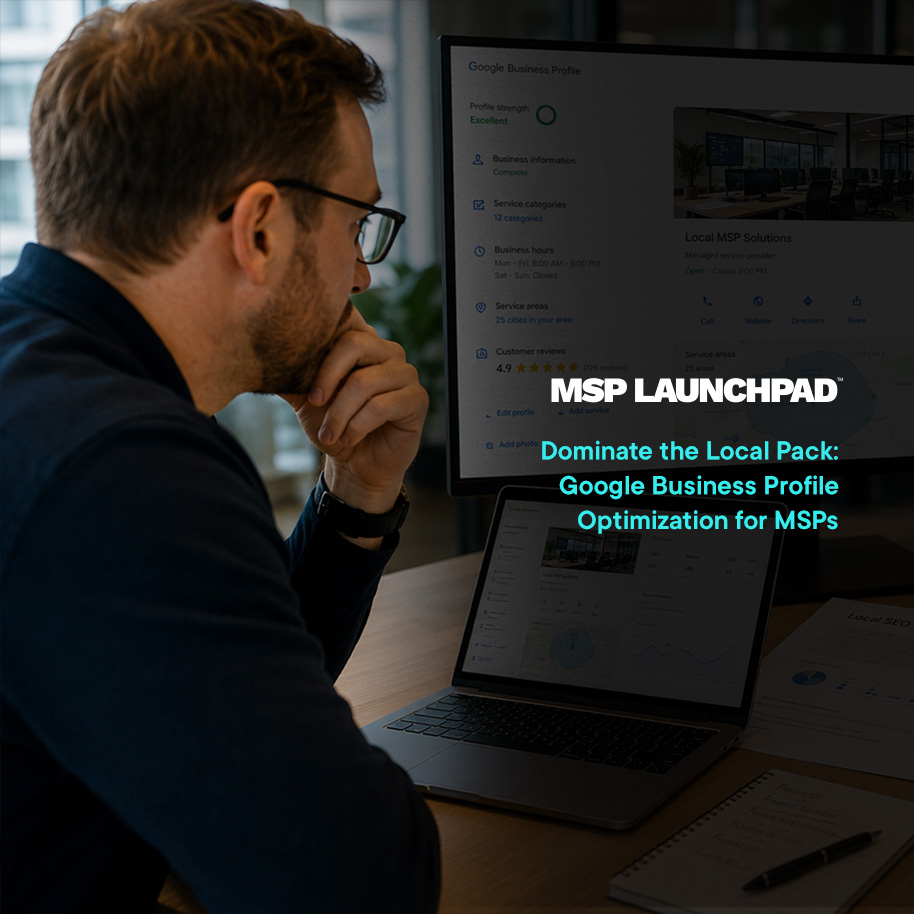


Local visibility matters when business owners need reliable IT support. Many prospects begin with Google, compare nearby providers, review ratings, and decide which MSP appears most credible. A weak listing can cause a capable provider to lose attention before a conversation begins.
Google Business Profile Optimization improves an MSP’s presence in local search results, Google Maps, and the local pack. A well-managed profile gives prospects access to services, hours, reviews, contact details, photos, and website links. The objective is to attract suitable prospects, generate enquiries, and support the wider local SEO strategy.
Google Business Profile Optimization begins with accurate information
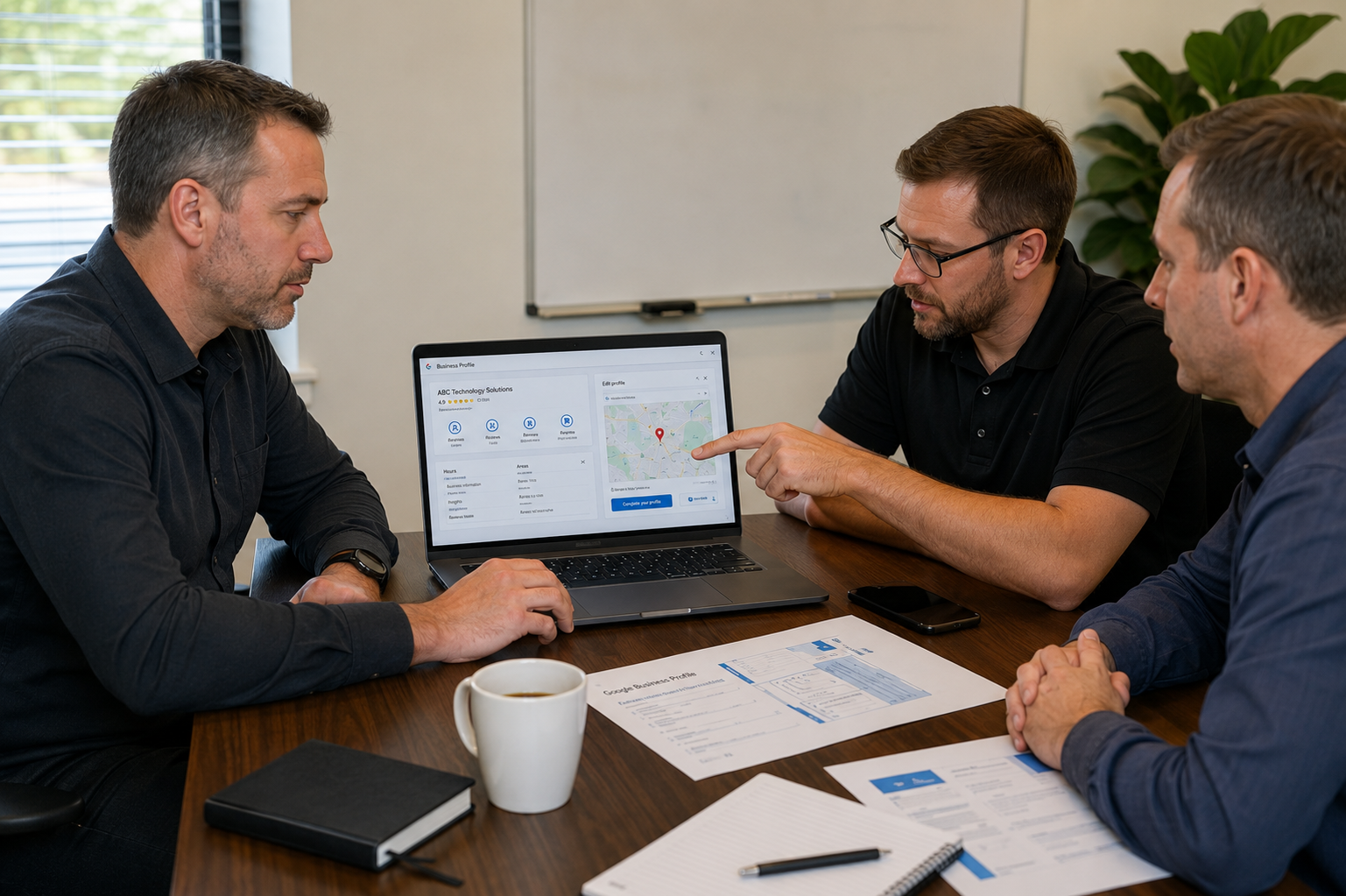
Start with the details that identify the business. The company name, address, phone number, website, and operating hours should be correct and consistent across the website, directories, and social profiles. Small differences can create confusion for search engines and potential clients.
Use the official business name without adding unnecessary service or location keywords. Choose the primary category that most accurately represents the company, then add secondary categories only when they reflect services the MSP genuinely provides.
List only the cities and communities the company can realistically support, especially when onsite visits are offered. An overly broad service area may attract enquiries the MSP cannot serve efficiently.
Use the description to explain the ideal client, core services, and business value. Mention relevant industries naturally and keep all business hours current.
Local pack ranking relies on strong local signals
The local pack is the group of prominent business listings shown for many location-based searches. A high local pack ranking can place an MSP above standard organic results and make the company easier to compare with nearby competitors.
Local visibility is shaped by relevance, distance, and prominence. Relevance reflects how closely the listing matches a search. Distance considers the user’s location or the place included in the query. Prominence relates to the business’s online credibility and authority.
An MSP cannot control the searcher’s location, but accurate categories, strong reviews, consistent business data, and useful website pages can strengthen relevance and prominence.
The website should reinforce the same message. Service pages can explain managed IT, cybersecurity, cloud support, compliance, backup, and other solutions in detail. Location pages may support individual markets, but each one should contain useful local information instead of duplicated copy with a different city name.
Trusted citations also help. Chamber profiles, business directories, partner pages, and industry associations should display consistent information.

Google Maps SEO depends on profile completeness
Google Maps SEO focuses on making a business listing more visible and useful within Maps and location-based search. A complete profile gives both Google and potential clients more information to evaluate.
Add services individually and describe them in clear language. Prospects may search for managed IT support, cybersecurity assessments, Microsoft 365 help, cloud migration, backup, or disaster recovery. Detailed service entries can improve relevance for these searches.
Authentic photos also strengthen credibility. Include images of the office, team, technicians, branded vehicles, client events, or community participation where appropriate. Stock images may fill space, but they rarely prove that the company is active in the area.
Publish posts regularly to share educational resources, service updates, local involvement, cybersecurity reminders, or useful blog content. The questions and answers section can also address service areas, supported industries, onsite availability, and onboarding. Monitor this area because users can add questions.
GBP optimization should make the next step easy
Visibility does not automatically create qualified leads. GBP optimization should guide prospects from discovery to action with minimal friction.
The website button should lead to a fast, mobile-friendly page that matches the searcher’s intent. A homepage can work, but a strong local landing page may provide a more focused path when it explains services, location coverage, proof, and contact options.
Enable only the contact features the team can manage well. Messaging can be useful when someone responds quickly, but an ignored enquiry creates a poor first impression. Calls and website visits are often the most practical actions for an MSP.
Service descriptions should connect technical work with business outcomes. Prospects are usually concerned about downtime, cyber risk, compliance, productivity, response quality, and future planning. Explain how the MSP addresses those concerns without exaggerated claims.

Reviews improve credibility and visibility
Reviews give prospects evidence that an MSP communicates well and delivers dependable support. A steady flow of genuine feedback may also strengthen local prominence.
Create a simple review request process. Good opportunities include the completion of onboarding, a successful project, a resolved issue, or a positive client meeting. Provide a direct link so the client can respond easily.
Do not offer incentives or pressure clients to leave only positive feedback. Reviews should reflect real experiences. A natural pattern of new reviews is more credible than a sudden burst followed by long inactivity.
Respond professionally whenever possible. Thank satisfied clients without disclosing confidential information. Negative feedback should receive a calm reply that acknowledges the concern and moves the detailed discussion to a private channel.
Recurring review themes can also improve marketing. Comments about responsiveness, communication, technical knowledge, or strategic guidance reveal what clients value and can shape website copy and sales conversations.
Local content supports stronger profile performance
A business profile works best when the website provides deeper information. The listing may capture attention, but the site helps prospects decide whether the MSP fits their needs.
Publish content tied to the concerns of local businesses. Useful topics may include preparing for regional outages, securing hybrid teams, meeting industry requirements, or reducing technology disruptions. Local relevance should come from practical detail, not repeated city names.
Case studies can provide valuable proof. Describe the client challenge, the solution, and the result while protecting sensitive information. Mentioning the industry or general service area can make the example more relatable.
Internal links should move visitors from educational articles to relevant service and contact pages. Avoid thin location pages created only for rankings. Each page should offer distinct information about services in that market, industries served, and evidence of experience.
Performance tracking keeps GBP optimization focused
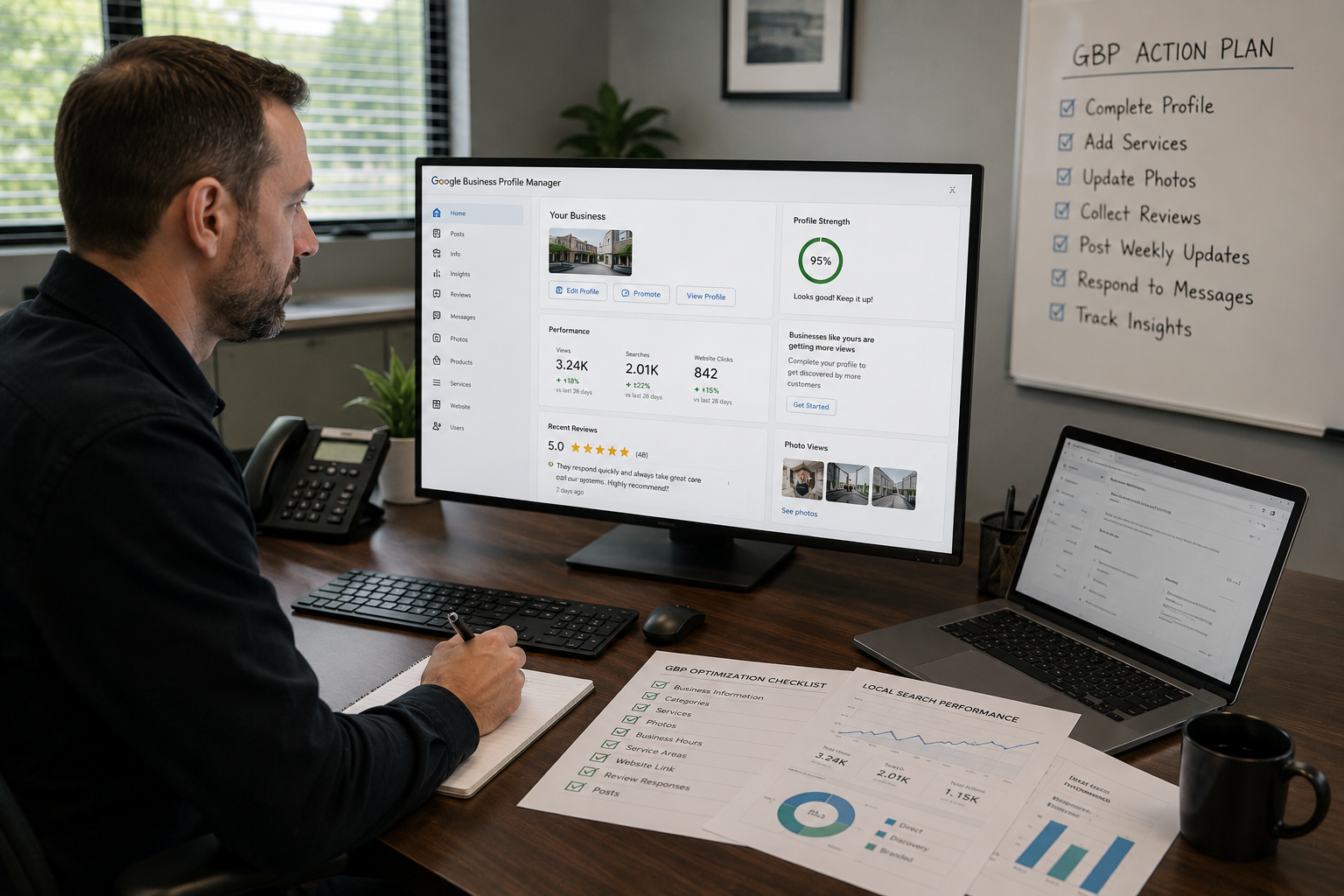
Optimization should be evaluated through business outcomes. Profile insights can show searches, calls, website clicks, and other interactions that reveal how people use the listing.
Review the search terms generating visibility and compare them with the company’s target services. Unrelated searches may signal that categories, service descriptions, or website content need refinement.
Local ranking checks should cover the actual service area because results vary by location. Connect profile data with website analytics and lead records to track local traffic, calls, form submissions, and qualified consultations.
Review performance each month and make measured updates. Add current photos, refine services, publish useful posts, request reviews, and correct inaccurate information. Consistent management usually produces better long-term results than occasional large changes.
Final thoughts
Google Business Profile Optimization gives MSPs a practical way to improve visibility and credibility in the markets they serve. Accurate information, strong reviews, relevant website content, and a clear conversion path help turn local searches into meaningful enquiries. Local pack ranking, Google Maps SEO, and GBP optimization should support one connected local marketing strategy. MSP Launchpad helps managed service providers build systems that turn stronger visibility into qualified growth opportunities.
FAQs
What is Google Business Profile Optimization for an MSP?
Google Business Profile Optimization is the process of improving an MSP’s listing so it is accurate, relevant, active, and useful to local prospects. It includes categories, services, photos, reviews, posts, business information, and links to suitable website pages.
What improves local pack ranking for managed service providers?
Local pack ranking improves when an MSP strengthens its relevance and prominence through accurate categories, detailed services, genuine reviews, consistent citations, and locally relevant website content. Distance also affects results and cannot be fully controlled.
What role does Google Maps SEO play in MSP marketing?
Google Maps SEO helps an MSP appear when nearby businesses search for IT support or related services. A complete profile, accurate service areas, authentic photos, strong reviews, and relevant landing pages can increase visibility and encourage enquiries.
How often should an MSP review its GBP optimization?
An MSP should review its GBP optimization at least monthly. Business details should be corrected immediately when they change, while services, posts, photos, reviews, and performance data should be checked on a consistent schedule.

%20(1).avif)
.svg)